
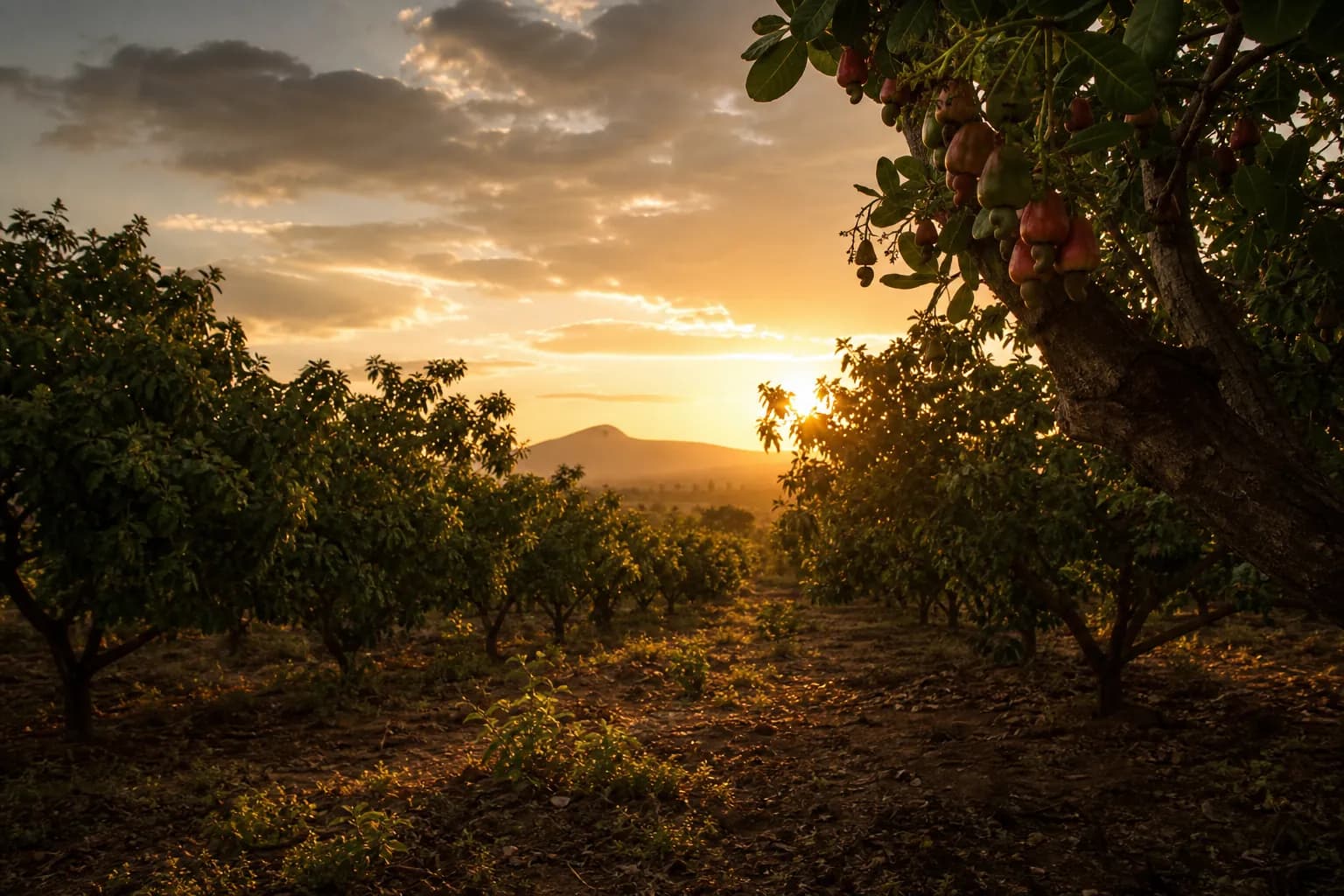
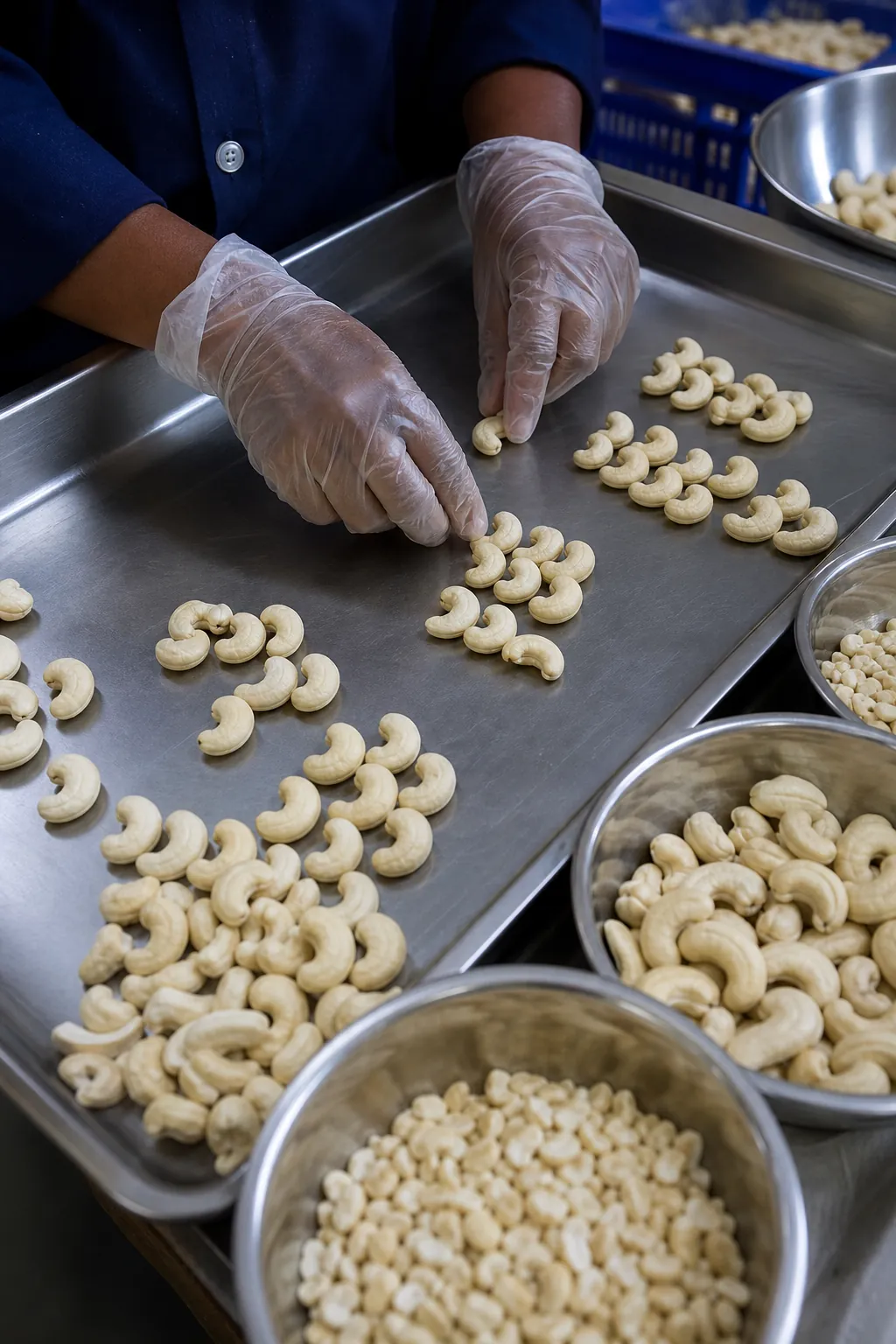
The global cashew trade splits cleanly into two functions — Africa grows the bulk of the world's raw cashew nuts, Asia processes the bulk of the world's kernels. Côte d'Ivoire, Tanzania, Ghana, Mozambique, Nigeria and Guinea-Bissau together produce the lion's share of African RCN; India and Vietnam together account for the majority of global shelling capacity, with Vietnam alone processing close to half of the world's kernels in a typical year. For a wholesale buyer, knowing which side of that split you are buying from changes price, traceability, lead time and the questions worth asking.
The geography of the trade
African origins do most of the growing and a rising — but still minority — share of the processing. Asian origins, principally India and Vietnam, do most of the processing and consume or re-export the resulting kernels. A single container of cashews on a European supermarket shelf may carry an African nut shelled in Vietnam, packed for an Indian brand and labelled with the importing country's QC programme. Where the kernel was grown and where it was processed are two different questions, and the answers usually differ.
Buying from African origin (direct)
- Single-origin traceability — lots tied to a defined district and harvest window.
- Shorter supply chain — one fewer layer of intermediation between farm and container.
- Stronger out-turn on bold lots — African RCN is often selected for kernel programmes precisely for this.
- Origin-of-Africa narrative for buyers whose markets reward it.
- Longer transit on some routes — particularly to Southeast Asia and the Far East.
Buying from Asian processors
- Processing scale — consistent breakdown across grades, very large contract volumes.
- Programme certifications — many established processors already align with major buyer programmes.
- Breadth of finished forms — roasted, coated, flavoured, retail-packed.
- Blended-origin supply — a feature for consistency, a limitation for traceability claims.
- Layer of intermediation — origin of the RCN is rarely surfaced to the buyer.
Where Tanzania sits
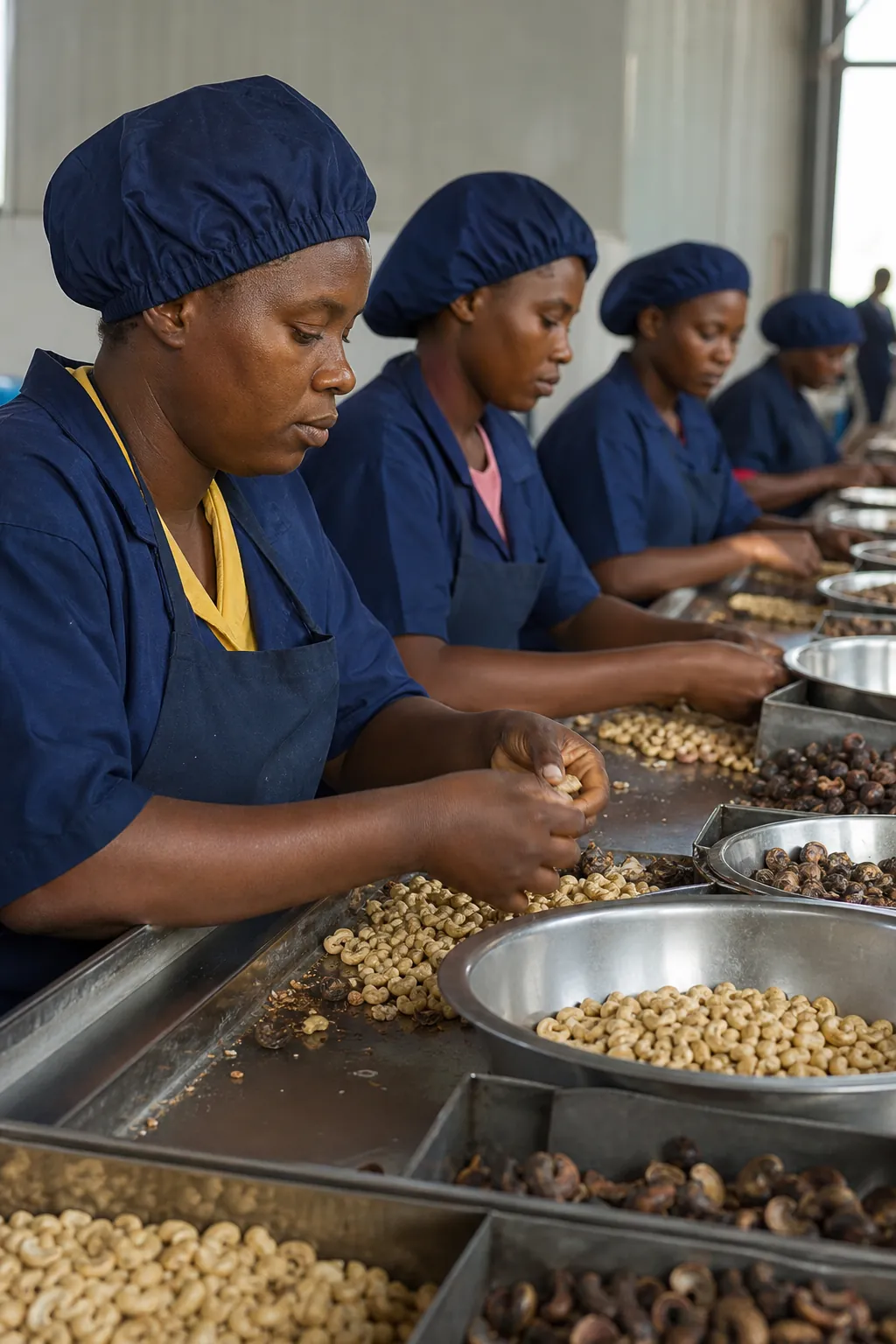
Tanzania is the largest cashew producer in Africa and the country has been steadily building processing capacity at origin. That changes the buyer's options: instead of choosing between 'African RCN' and 'Asian-processed kernels', a Tanzanian exporter that processes in-country offers single-origin kernels with the traceability of an African origin and the kernel format of an Asian programme. The number of exporters that do this well is small, but the buyer trade-off is real.
How to choose for your programme
Four questions narrow it quickly:
- Does your end-buyer or audit programme require traceability to a defined origin?
- Is your priority kernel breakdown consistency, or out-turn and bold-lot quality?
- Do you need year-round drawdown from inventory, or harvest-fresh seasonal lots?
- Are you sourcing for a single-origin brand story, or for a multi-origin blended programme?
“Africa grows it, Asia shells it — but that line is moving. A serious origin-side exporter today competes on the kernel, not just the nut.”
- Joachim Mbwana, Sourcing Lead
Related reading
Leave a Comment
Your email address will not be published.