

At a glance
- Importing cashews from Tanzania follows seven steps: define the lot, sample, contract, pay, ship, clear customs and verify on arrival.
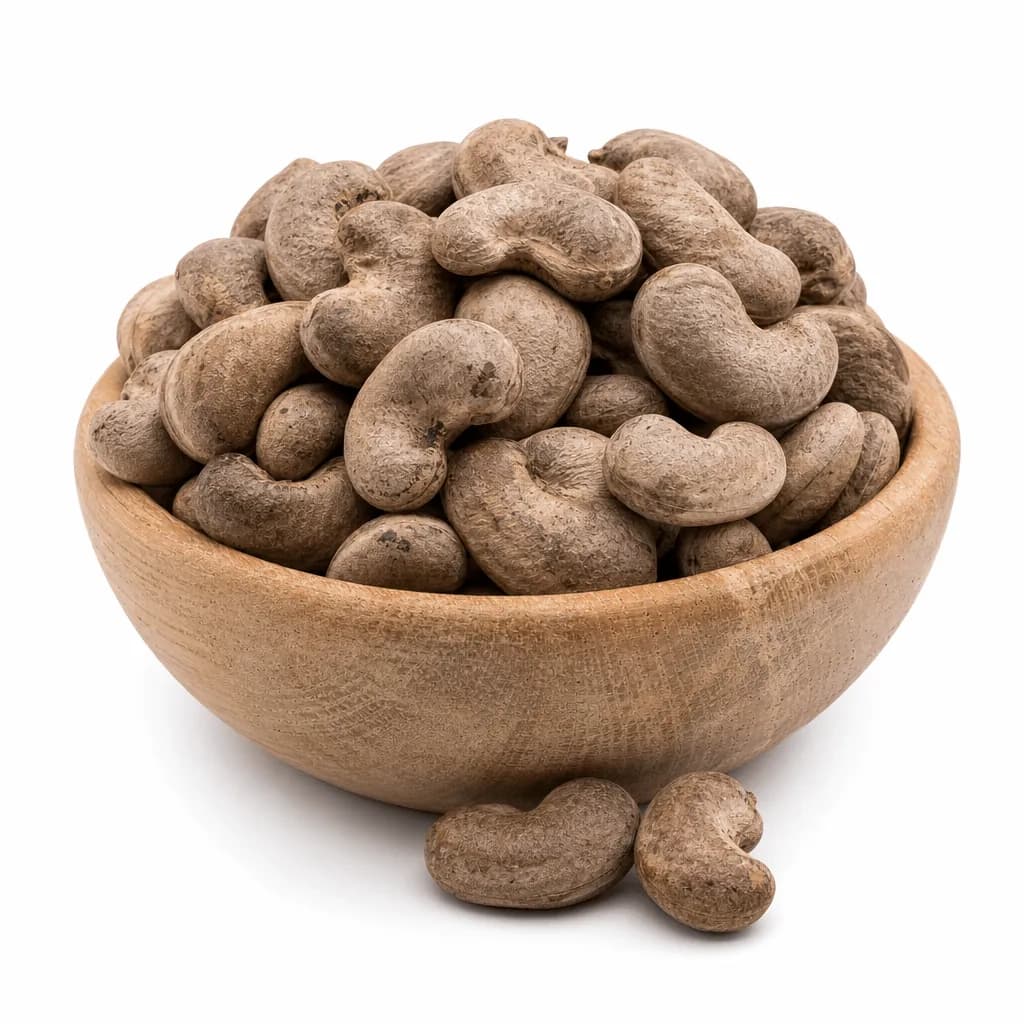
- A 20-foot container holds around 12.5 metric tons of vacuum-packed kernels, or 17 to 18 metric tons of raw cashew nuts.
- Typical payment structure: a 20 to 30 per cent deposit at contract, balance against shipping documents — LC at sight or TT.
- EU aflatoxin limits for ready-to-eat tree nuts are 2 µg/kg for B1 and 4 µg/kg total; other markets differ, so test to destination.
- Export kernels are specified at a maximum 5 per cent moisture; raw cashew nuts at 8 to 10 per cent.
- Verify the delivered lot with kernel counts across multiple cartons while the container is still open.
Importing wholesale cashew nuts from Tanzania follows a predictable seven-step path — agree the grade and volume, accept a pre-shipment sample, contract with FOB or CIF terms, arrange payment by Letter of Credit or Telegraphic Transfer, coordinate shipping and documentation, clear customs against your destination market's food-safety rules, and verify the delivered lot against the contract spec. This guide walks each step, what a Tanzanian exporter should provide, and where first-time importers most often get caught out.
Step 1 — Define the lot before you ask for a price
Before any quote is meaningful, fix three things: the kernel grade or raw-cashew-nut out-turn, the container volume, and the destination port. A 20-foot container holds around 12.5 metric tons of vacuum-packed kernels in tins, or roughly 17 to 18 metric tons of raw cashew nuts in woven polypropylene bags. Tightening the brief upfront avoids the back-and-forth that delays a contract by weeks.
Step 2 — Receive a representative pre-shipment sample
A sample is only useful if it actually reflects the lot. Ask for a representative sample drawn across the container, not a hand-picked best-of. Confirm the kernel count per pound (or RCN out-turn), the colour, the defect tolerance and the moisture against your spec. A serious exporter will send the sample without quibbling about who pays the courier.
Step 3 — Sign a contract with explicit terms
A complete cashew contract names six things so the contract grade and the delivered grade describe the same nut:
- Grade and form — e.g. W320 white whole, SW240, LWP.
- Kernel count per pound (or RCN out-turn) with an accepted tolerance band.
- Maximum moisture content (typically 5 per cent for export kernels, 8 to 10 per cent for RCN).
- Defect tolerances — broken, scorched, foreign matter, infestation.
- Food-safety standard the lot is processed under and the testing protocol.
- Packaging format, net weight per unit, and Incoterm (FOB, CIF, CFR).
Step 4 — Open payment under LC or TT
Wholesale cashew trade runs on Letter of Credit (LC at sight) or Telegraphic Transfer (TT). The most common structure is a deposit at contract — often 20 to 30 per cent — with the balance against shipping documents on or after the bill of lading date. Specifics depend on order size and buyer history; on a first contract, expect a slightly more cautious structure than a buyer with a track record.
Step 5 — Coordinate shipping and documentation
Once the lot is processed and packed, the exporter books the container and prepares the documentation set. A complete export pack from Tanzania typically includes:
- Commercial invoice and a detailed packing list with lot numbers.
- Certificate of origin and the relevant phytosanitary certificate.
- Aflatoxin and quality test reports tied to the shipped lots.
- Bill of lading and full container loading details.
- Processing facility certification and quality system references.
Step 6 — Clear customs against your destination market's rules
Different jurisdictions enforce different limits at the border, so test against the destination market — not the average. EU food law sets maximum aflatoxin levels for ready-to-eat tree nuts at 2 µg/kg for B1 and 4 µg/kg for total aflatoxins, with higher tolerances for nuts intended for further processing. The Gulf, India and Vietnam apply different thresholds; confirm the limit that governs your shipment well before the vessel sails.
Step 7 — Verify the delivered grade matches the contract
On arrival, run kernel counts and defect checks across multiple cartons before signing off on the container. Resolve any deviation with the exporter while the container is still open and the lot fully documented — the conversation gets harder once nuts are mixed into a processing line.
“The contract is not the deal. The delivered container is the deal — and the discipline that holds them in line is documentation, not goodwill.”
- Joachim Mbwana, Sourcing Lead
Common mistakes new importers make
- Negotiating price before grade and volume are fully defined.
- Treating the pre-shipment sample as marketing rather than evidence.
- Leaving moisture, defect tolerances and food-safety standards out of the contract.
- Assuming the destination market accepts a uniform aflatoxin limit.
- Skipping the arrival inspection and discovering grade drift after the lot is processed.
Related guides
- Wholesale cashew nuts supplier overview- grades, MOQ, ports and documents in one place
- Cashew kernel grades explained- W180 to W500, scorched and splits
- Aflatoxin control on every shipment- EU thresholds and drying-rack discipline
- Packing & shipping cashew nuts- Containers, transit lanes, documentation
- Buyer FAQ- MOQ, payment terms, certifications
Related reading
Leave a Comment
Your email address will not be published.