

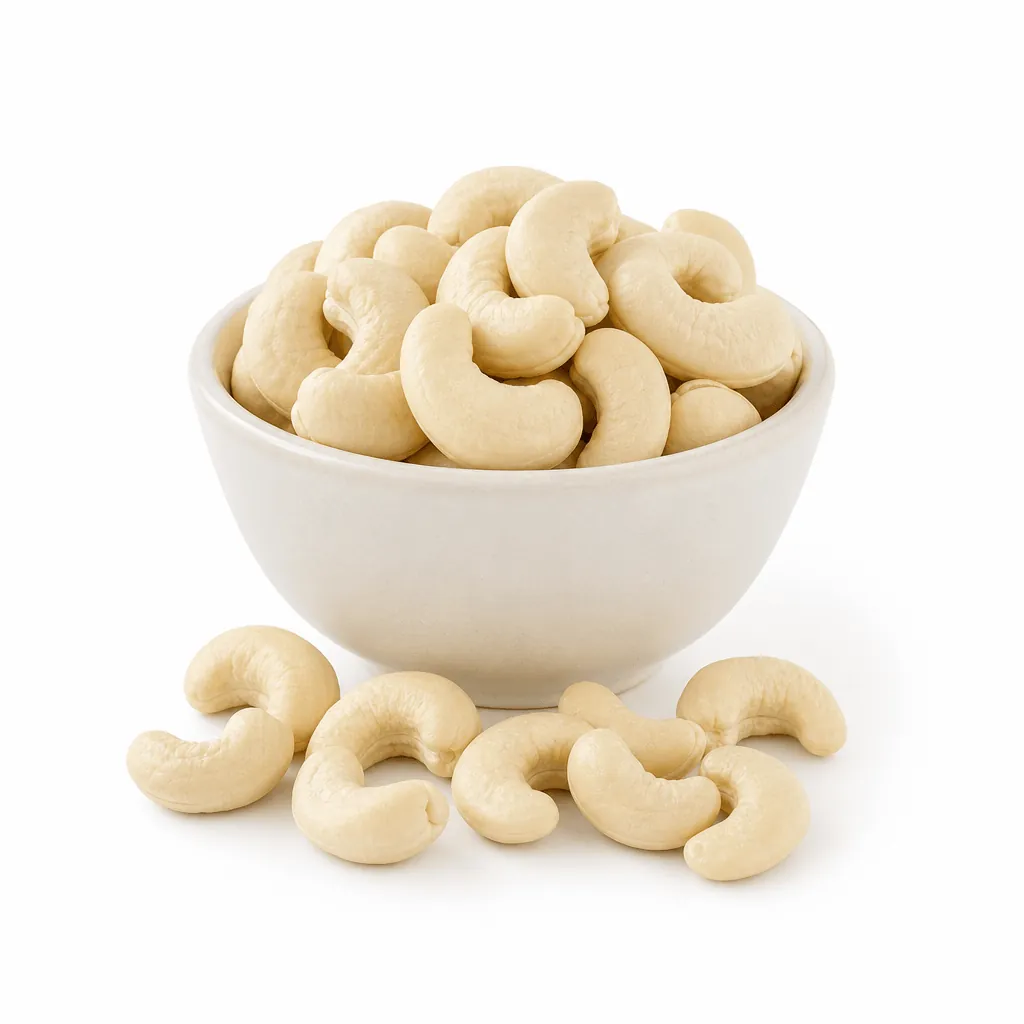
Approve a cashew substitution against the original ingredient specification and the buyer's process trial. A different grade code does not establish equivalent performance. Keep the original requirement, offered lot, trial conditions and decision in one record.
Describe every proposed change
Write what the ingredient must do in the finished product. A visible whole-kernel requirement presents a different decision from an ingredient that will be milled. Record changes in form, colour, size band and process state separately; do not hide several deviations behind “equivalent grade”.
- Original ingredient specification and revision: ______
- Original form, colour, size band and process state: ______
- Proposed replacement and offered lot ID: ______
- Each deviation from the original: ______
- Requirements that remain mandatory: ______
- Intended finished product and process stage: ______
Separate catalogue descriptions from lot evidence
The documented W320 grade is 300–320 kernels per pound. The catalogue also includes a scorched-and-splits line covering SW / WS / SS. These identify options to discuss; they do not establish that an offered lot meets your original requirement. Kernel moisture is specified below 5%, but the proposed lot still needs evidence against the agreed specification.
Use the splits-and-pieces guide to interpret form and size descriptions. A code discussed in a guide does not establish that the corresponding product is available to order. Ask for the actual offered form and lot.
Compare performance under recorded conditions
Choose trial checks for the intended use. For a visible inclusion, record the buyer's appearance and distribution checks. For milling, record preparation settings and the buyer's assessment of the processed ingredient. If roasting or another preparation step differs, document that difference before attributing the result to grade.
- Requirement being tested and buyer-defined acceptance criterion: ______
- Original ingredient or approved reference ID: ______
- Replacement sample ID and relationship to the commercial lot: ______
- Material amount and preparation conditions for each trial: ______
- Equipment/settings used for each: ______
- Original result; replacement result; observation date: ______
- Differences in conditions that prevent direct comparison: ______
- Missing evidence or repeat trial needed: ______
Do not assume equal dosing, identical taste or unchanged output. If the trial needed a process adjustment, record whether the buyer approves that adjustment for the intended use. A successful result under changed conditions needs those conditions attached to it.
Separate technical approval from the order change
- Buyer decision: approve / reject / hold for clarification: ______
- Accepted deviations and limits on approval: ______
- Approver and decision date: ______
- Affected order, ingredient revision or production batch: ______
- Unresolved checks and owner: ______
- Supplier confirmation of proposed grade, quantity and packing: ______
An approval tied to one offered lot should not silently become approval for every future lot under that code. State its scope. If a mandatory criterion has no comparable result, leave the decision pending under the buyer's procedure.
The documented kernel order basis is one 20ft container, approximately 12.5 MT, packed in 10 kg vacuum tins in cartons. Split-grade containers are considered case by case. Confirm order configuration separately from technical approval; a successful trial does not establish stock or a split-container commitment.
Ask about a specific substitution
Send the original specification, proposed change, intended use, quantity and destination. Include requirements that cannot change and evidence still needed. Afri Exports can confirm which actual options can be discussed.
Related reading

Leave a Comment
Your email address will not be published.