
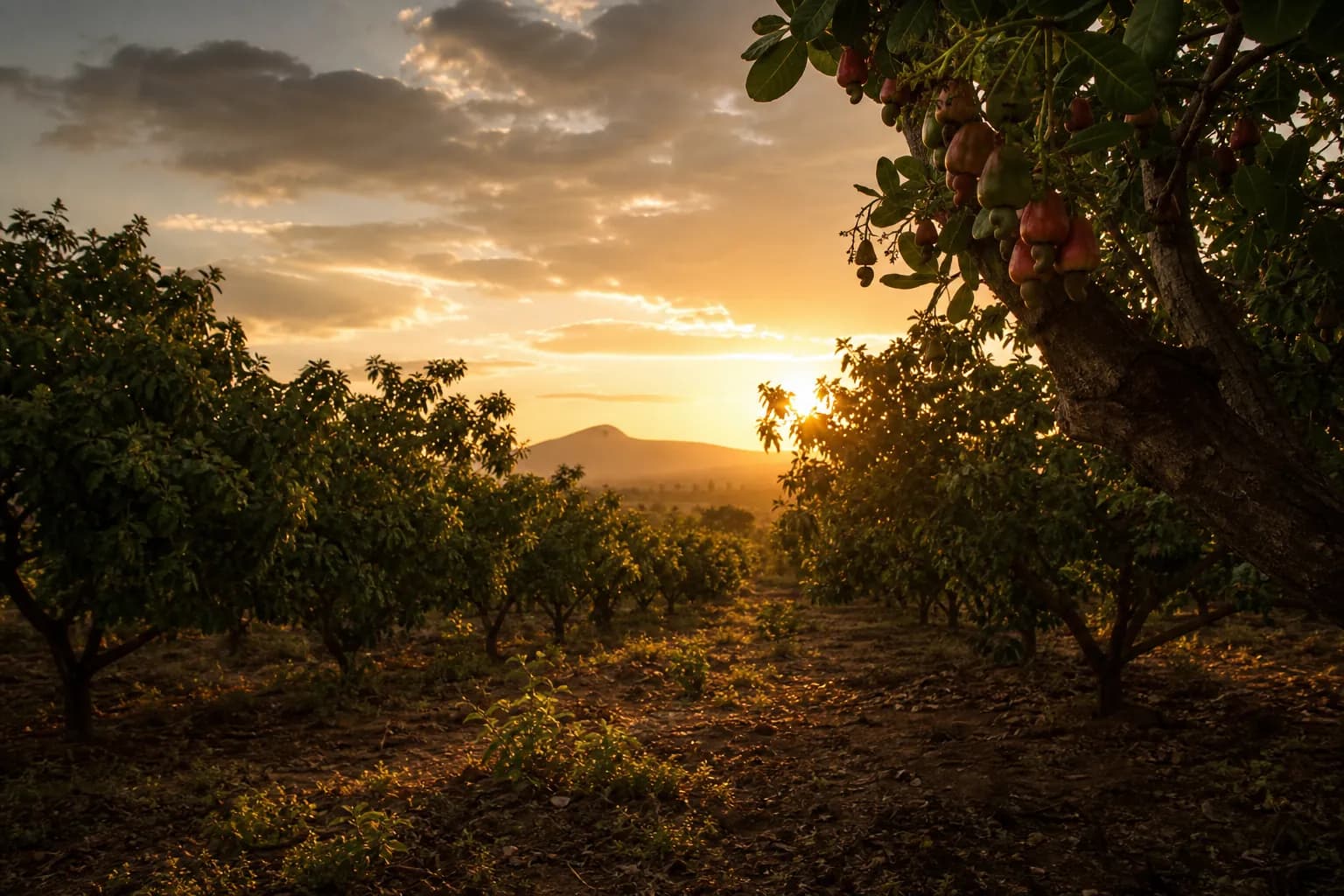

At a glance
- Broken is a description of size and form, not of food quality — the kernel is the same nut, it simply came apart during shelling or peeling.
- Splits (WS / SS) — Form: kernel halved lengthwise along its natural seam. Best end use: visible inclusions in cereal bars, cookies and chocolate.
- Butts (B) — Form: kernel broken across the width, halves still naturally attached. Best end use: granola, muesli and snack mixes where near-whole reads as whole.
- LWP, large white pieces — Form: fragments retained on the coarser piece sieve. Best end use: bakery toppings, ice cream, praline and brittle.
- SWP, small white pieces — Form: fragments passing the coarser sieve, retained on the finer one. Best end use: cashew butter, paste, cashew milk and fillings.
- Baby bits (BB) — Form: the smallest sound fragments. Best end use: pastes, spreads, coatings and inclusions where texture is fully processed.
- Scorched codes (SW, SSW, SS) describe colour, not breakage — colour and form are separate axes of the same system.
- Piece grades carry the same moisture ceiling as our whole kernels: below 5 per cent.
Most cashew buying guides stop at the whole-kernel ladder — W180 down to W450, counted per pound. That ladder matters if the shopper can see the nut. If you are grinding kernels into butter, folding them into a cereal bar or churning them through ice cream, specifying against it quietly costs you money on every container. This guide covers the other half of the grade system.
What are cashew splits, and why do they exist?
A cashew kernel is a single seed made of two halves joined along a natural seam. Shelling cracks a hard, curved shell around that seed, and peeling strips the skin clinging to it. Both steps put the kernel under pressure, and a share of every batch responds by parting along the seam or breaking across it. No processing line anywhere returns a hundred per cent whole kernels — the broken fraction is a structural output of the process, not a sign that something went wrong.
So broken grades are graded rather than discarded, and they are reliably available season after season. A processor sorts the broken share by size and colour into defined trade grades, exactly as it sorts the wholes, and sells them into a separate demand pool: confectionery, bakery, spreads, cereals and plant-based dairy. Those buyers are not settling for pieces. Pieces are what their product needs.
What do the broken-grade codes actually mean?
The codes compress colour, form and size into two or three letters. W means white, S at the front means scorched, and the rest describes the shape of what is in the bag.
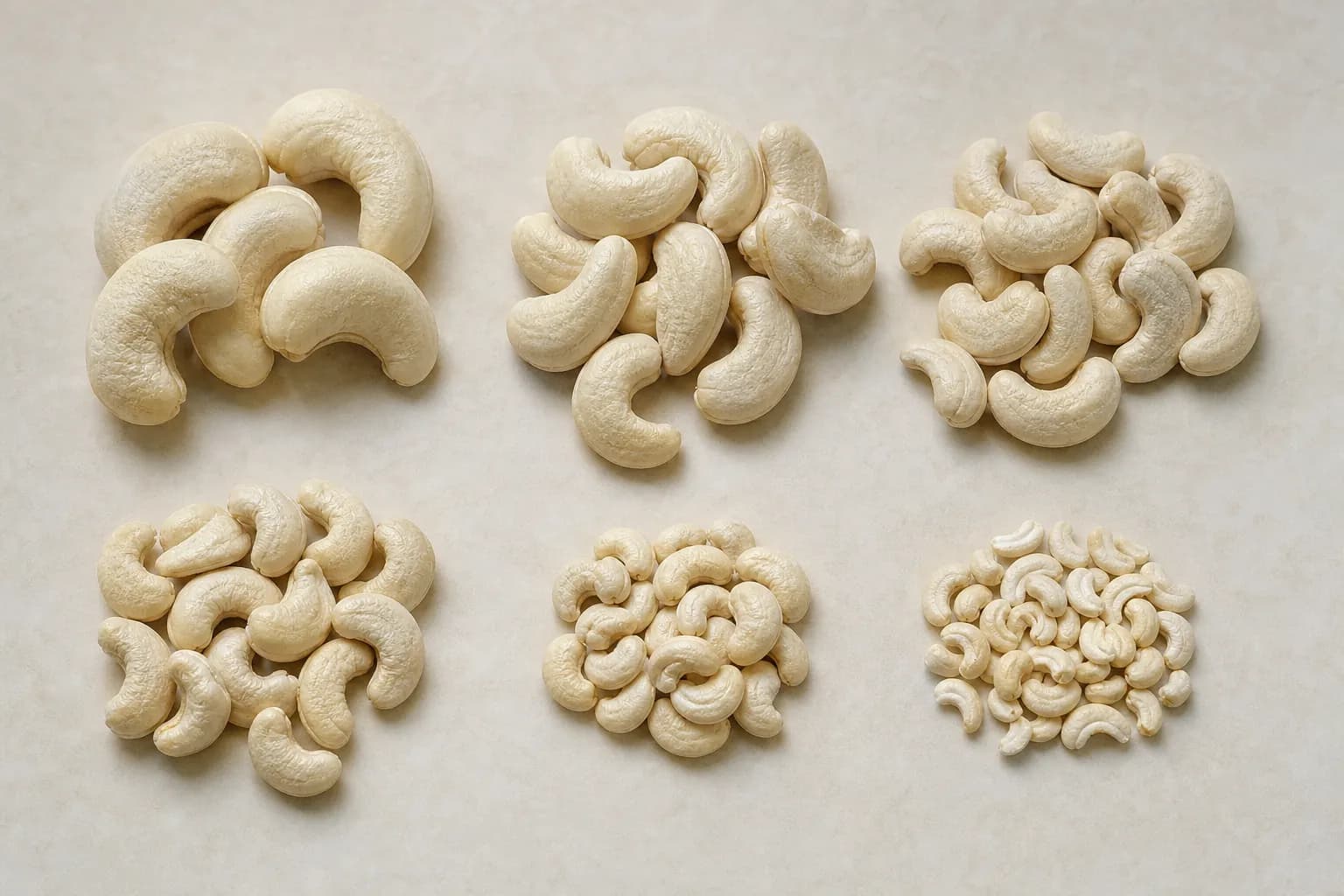
- Splits (S, WS white / SS scorched) — Piece size: about half a kernel. Form: separated lengthwise along the natural seam, each half keeping the kidney profile. Best end use: cereal and granola bars, cookies, chocolate blocks and trail mixes, where a recognisable piece of cashew is part of the eating experience.
- Butts (B, WB white / SB scorched) — Piece size: just under a whole kernel. Form: broken across the width, halves still attached. Best end use: muesli, granola, snack mixes and bulk roasted lines — butts read as whole to a customer with a spoon.
- LWP, large white pieces — Piece size: below butt and split size, retained on the coarser of the two piece sieves. Form: irregular fragments. Best end use: bakery toppings and fillings, praline and brittle, ice cream inclusions, cashew-crusted savoury products.
- SWP, small white pieces — Piece size: passing the coarser sieve, retained on the finer one. Form: small irregular fragments. Best end use: cashew butter and paste, cashew milk and plant-based dairy, confectionery fillings and sauces.
- Baby bits (BB) — Piece size: the smallest sound fragments, passing the small-piece sieve. Form: chips and granules, short of dust. Best end use: pastes and spreads, coating slurries, and industrial grinding where nothing survives as a recognisable piece.
- Scorched pieces (the S-prefixed piece codes) — Piece size: as the matching white grade. Form: identical, with a light to deeper amber colour. Best end use: any of the above where the product is roasted, coated, caramelised or dark enough to hide the tone.
One caution worth writing into the contract: the sieve cut separating LWP from SWP is a commercial term, not a universal constant, and processors draw the line in different places. Name the sieve, or the piece-size band you expect, and ask for a sample against it. That one sentence prevents most piece-grade disputes.
Where do scorched grades (SW, SSW) sit?
This is the point most buyers get wrong. Scorched is a colour class, not a breakage class. During shelling and drying some kernels take on a light amber tone from heat; they are sound, fully edible and graded on their own scale. SW is a scorched whole kernel, sized like a white whole; SSW carries a deeper amber tone. Neither is broken.
Colour and form run as two independent axes across the same system, which is why the vocabulary multiplies: a kernel can be white and whole, white and split, scorched and whole, or scorched and split. For a manufacturer that is an opportunity. If your process browns the nut anyway — roasting, caramelising, dark enrobing — the amber tone costs you nothing, and stacking both discounts by buying a scorched piece grade is the cheapest sound cashew you can put into a formulation.
Are broken cashews lower quality?
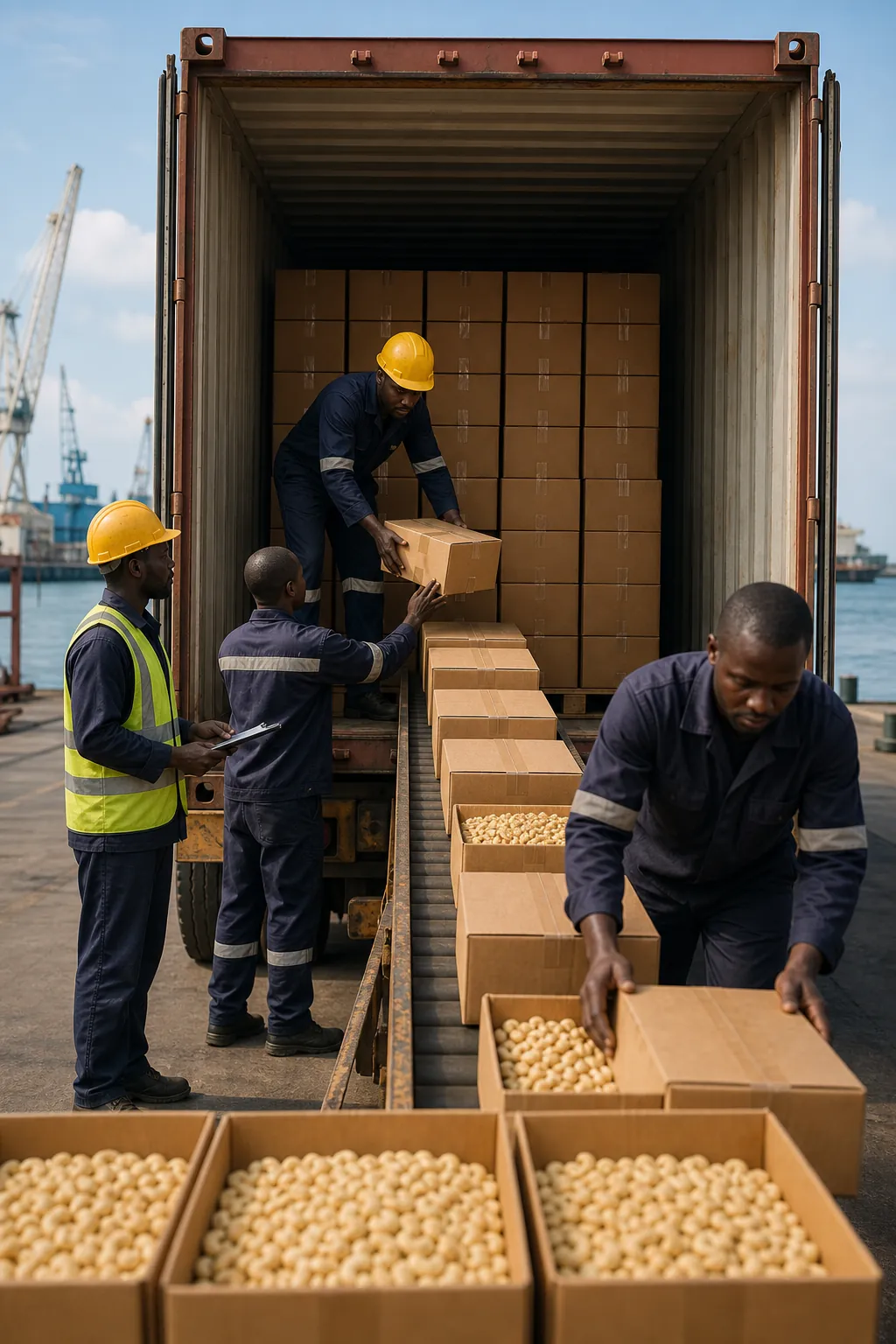
As food, no. Broken kernels come off the same single-origin southern Tanzanian lots and the same TBS-certified line as the whole grades beside them on the sorting table. They carry the same moisture ceiling, below 5 per cent, the same per-lot laboratory testing and the same traceability, and they pack the same way — 10 kg vacuum-packed tins in cartons, roughly 12.5 metric tons to a 20-foot container.
What changes is appearance, and appearance is priced. A whole W240 costs what it does because only part of a crop grows that large and survives shelling intact. When your product grinds, bakes or coats the kernel, you are buying that scarcity and then destroying the thing you paid for.
Why would a manufacturer buy pieces on purpose?
Because for a large class of products, wholeness is not a feature. The argument comes down to four points.
- Flavour and nutrition are unchanged. It is the same kernel, so the roast profile, the fat content and the taste your formulation was built around all carry over.
- Cost per kilogram is materially lower, and it compounds. On a recurring container programme, the gap between a whole grade and a piece grade is one of the few ingredient savings available without reformulating anything.
- You stop paying to destroy value. Buying wholes and chopping them in-house adds a step, generates fines you cannot sell, and gives a less consistent fragment than a graded piece lot.
- Dosing is more consistent. A sieved piece grade arrives inside a defined size band, which behaves more predictably in a depositor, mixer or grinder than kernels chopped in-house.
Which cashew grade is best for cashew butter?
Grinding removes form completely, so the smallest sound grade wins on cost: SWP or baby bits. If the kernels are roasted before grinding — as they are in most butters with any depth of flavour — scorched pieces are cheaper again and the colour difference disappears into the roast. The reasons to buy up the ladder are practical rather than technical: if the same line also needs visible pieces, one LWP stock item can be simpler to hold than two.
What still matters when you buy pieces?
Dropping the appearance requirement does not drop the specification. A few checks get more important in a piece grade, not less.
- Moisture — the same ceiling applies, below 5 per cent for export kernels. Wet pieces cake, clump in a hopper and shorten shelf life.
- Aflatoxin — the food-safety obligation is identical regardless of form, and destination limits do not soften for pieces. Ask for per-lot laboratory results tied to your lot number.
- Foreign matter — the check that matters most in pieces. Shell fragments and skin flakes hide far better among broken kernels than among wholes, so agree a tolerance and inspect against it.
- Colour consistency — a piece grade should be uniform batch to batch, not a blend of whatever was left over. Drift shows up plainly in a pale butter or an uncoated topping.
- Rancidity and turnover — broken kernels expose more surface to oxygen, so packing integrity and stock rotation carry more weight. Vacuum packing and a fresh crop year are not optional extras here.
- Fines and dust — set a maximum percentage of undersize material. Without that line, the cheapest quotation is usually the one carrying the most dust.
- Single-lot integrity — insist on graded output from identified lots, with traceability, rather than accumulated sweepings from an unknown number of them.
A written specification protects all seven. Name the grade code, the piece-size band or sieve cut, the maximum moisture, the foreign-matter and fines tolerances, the colour class, the crop year, the packing format and your destination market's aflatoxin limit — then check a representative sample before the container is booked.
“A piece grade is not what is left over. It is the same kernel, sorted for a product that was never going to show it — and the manufacturers who understand that stop paying for an appearance their customer will never see.”
- Joachim Mbwana, Sourcing Lead
We have shipped single-origin Tanzanian cashews since 2010, and the piece grades leave our line under the same controls as everything else: TBS-certified processing, per-lot laboratory testing and full traceability to district and harvest window. Tell us what you are making, and we will point you at the grade that suits it rather than the one that prices highest.
Related reading
Leave a Comment
Your email address will not be published.