

At a glance
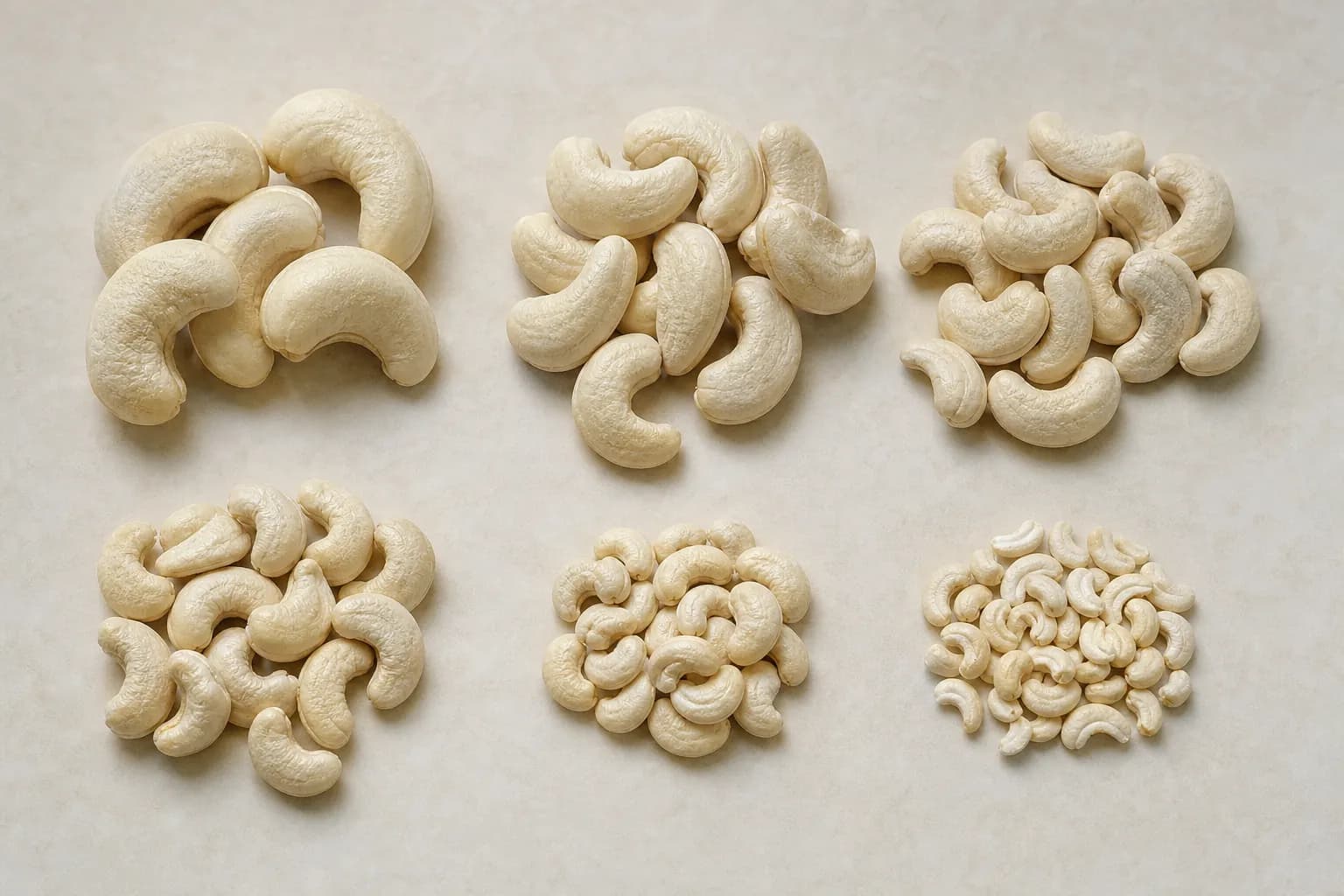
- W240 counts 220 to 240 kernels per pound; W320 counts 300 to 320 — the lower the count, the larger the kernel.
- By weight, a W240 kernel averages roughly 1.9 to 2.1 grams against 1.4 to 1.5 grams for W320 — about a third more nut per piece.
- W320 is the most widely traded cashew grade in the world and the benchmark most price quotes reference.
- W240 carries a consistent price premium over W320, because large kernels are a limited share of any harvest.
- Rule of thumb: if the whole kernel is visible to the shopper, W240 earns its premium; if it is roasted into a mix, coated or chopped, W320 is usually the better buy.
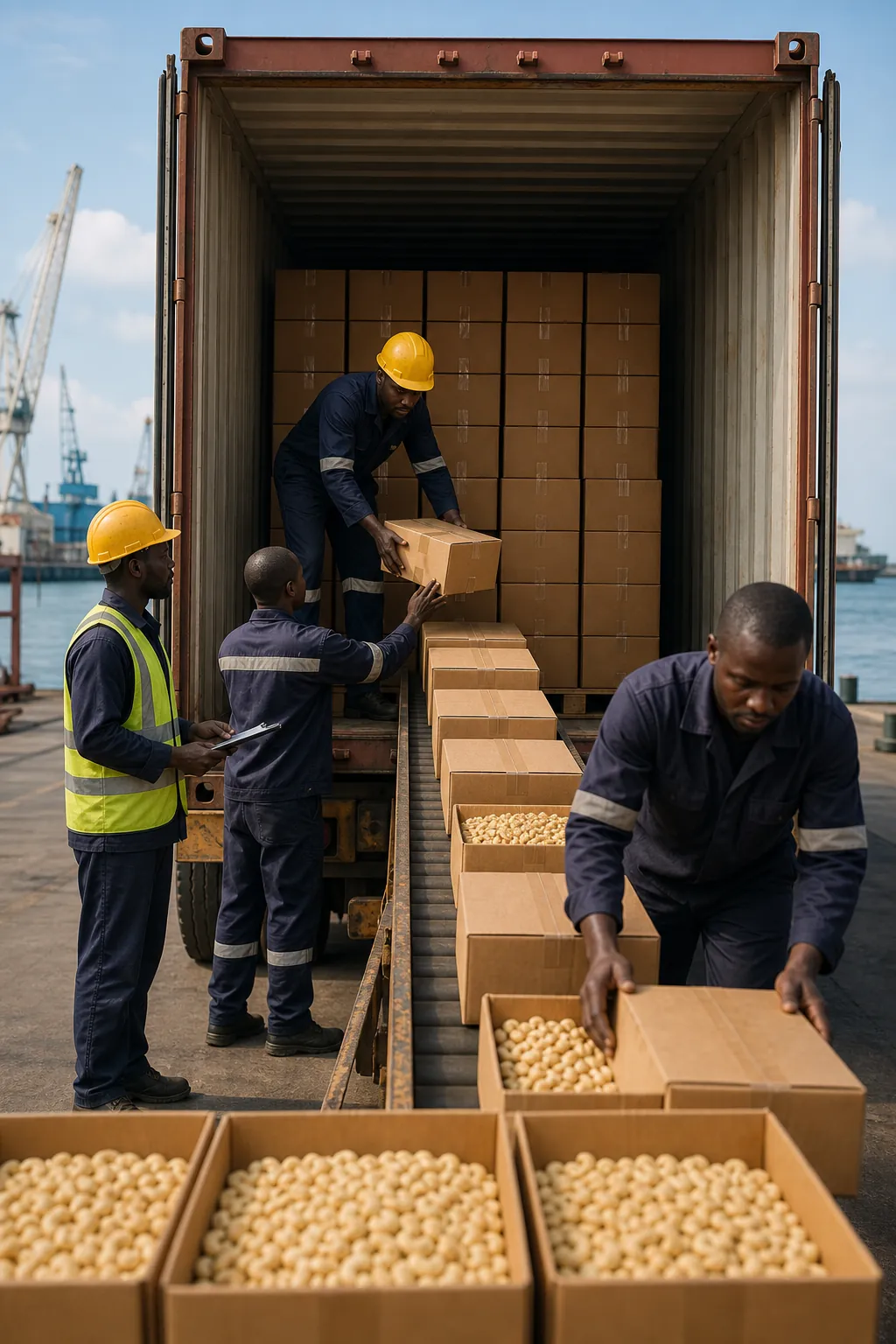
- Both grades ship from Tanzania in vacuum-packed 10 kg tins — about 12.5 metric tons to a 20-foot container.
W240 and W320 sit next to each other on the cashew grade ladder, and most wholesale kernel programmes eventually come down to a choice between them. The difference is real but specific — and buyers who can say exactly why they need one over the other tend to spend their kernel budget better.
How big is the size difference, really?
The counts tell the story: W240 packs 220 to 240 kernels into a pound, W320 packs 300 to 320. Do the division and a W240 kernel averages about 1.9 to 2.1 grams, while a W320 sits near 1.4 to 1.5 grams — roughly a third more kernel weight per piece. On a snack shelf that difference is visible at arm's length; in a chopped topping it disappears entirely. That single observation drives most of the decision.
When should you buy W240?
Buy W240 when the whole kernel is the product. Its size premium only pays back where the shopper, guest or end customer can actually see it.
- Premium retail packs and gift formats — the larger kernel reads as quality before the pack is opened.
- Roasted-and-salted whole lines where kernel size shows through the pack window.
- Hotel, airline and hospitality service, where presentation is part of the offer.
- Visible garnishes and top-decks — the kernel placed on the product rather than mixed into it.
When is W320 the better buy?
Buy W320 when the kernel does its work inside a product or a mix. It is the all-purpose grade for a reason — the same sound, whole kernel at a friendlier count and price.
- Trail mixes and mixed-nut blends, where the cashew sits alongside other nuts.
- Roasting and flavouring lines, where coating evens out visual differences.
- Bulk and value retail formats, where unit economics decide the shelf price.
- Ingredient use where the kernel is chopped — and if it is fully ground, splits and pieces are cheaper still.
How does the price-premium logic work?
W240 prices above W320 in every market and every season. The premium is set by biology: only part of any crop grows kernels large enough to grade 240 or better, so the supply of large wholes is capped at harvest, while W320-size kernels are the deepest pool in the trade. The size of the premium moves — it widens ahead of festive gifting seasons and narrows when demand shifts to value formats — but the direction never flips. Both grades track the same raw-nut cost floor, so a season that lifts one lifts the other.
Availability: what your exporter can actually allocate
W320 is available in depth from every serious origin and processor, all season. W240 depends on how a harvest actually graded out: bold-lot regions like southern Tanzania trend larger kernels, which is why Tanzanian programmes can hold W240 allocations that thinner crops cannot. If your programme leans on W240, contract it early — the large wholes are committed first.
A 20-foot container does not force the choice, either. A split-grade load of W240 and W320 in agreed proportions is routine, and a sensible way to run a first season on both grades before committing a full container to one.
How to sample-test the two grades
A side-by-side sample test settles the choice faster than any spec sheet. Ask for representative samples of both grades from the same origin and season, then run four checks:
- Count check — weigh out one pound (454 g) and count the kernels; W240 should land at 220 to 240, W320 at 300 to 320.
- Visual check — colour and wholeness against the spec, side by side under the same light.
- Roast trial — roast both under your production profile; size affects roast time and colour development.
- Shelf test — mock up your pack with each grade and judge the difference at the distance a shopper actually stands.
Then divide: price per kilogram by kernels per kilogram gives a per-kernel cost for each grade. If the shelf test does not visibly reward the W240, the arithmetic has already answered the question.
“The most expensive kernel is the one whose size your customer never notices. Match the grade to the moment the nut is actually seen, and the choice between W240 and W320 makes itself.”
- Asha Ngonyani, Quality Manager
Related reading
- Wholesale cashew nuts supplier overview- grades, MOQ, ports and documents in one place
- Cashew kernel grades explained- The full W180-to-W500 ladder in context
- How much do wholesale cashews cost?- The pricing factors behind the premium
- Cashew wholesale MOQ explained- Split-grade containers and order sizing
- How to import cashew nuts from Tanzania- The seven-step buyer's playbook
Related reading

Leave a Comment
Your email address will not be published.