
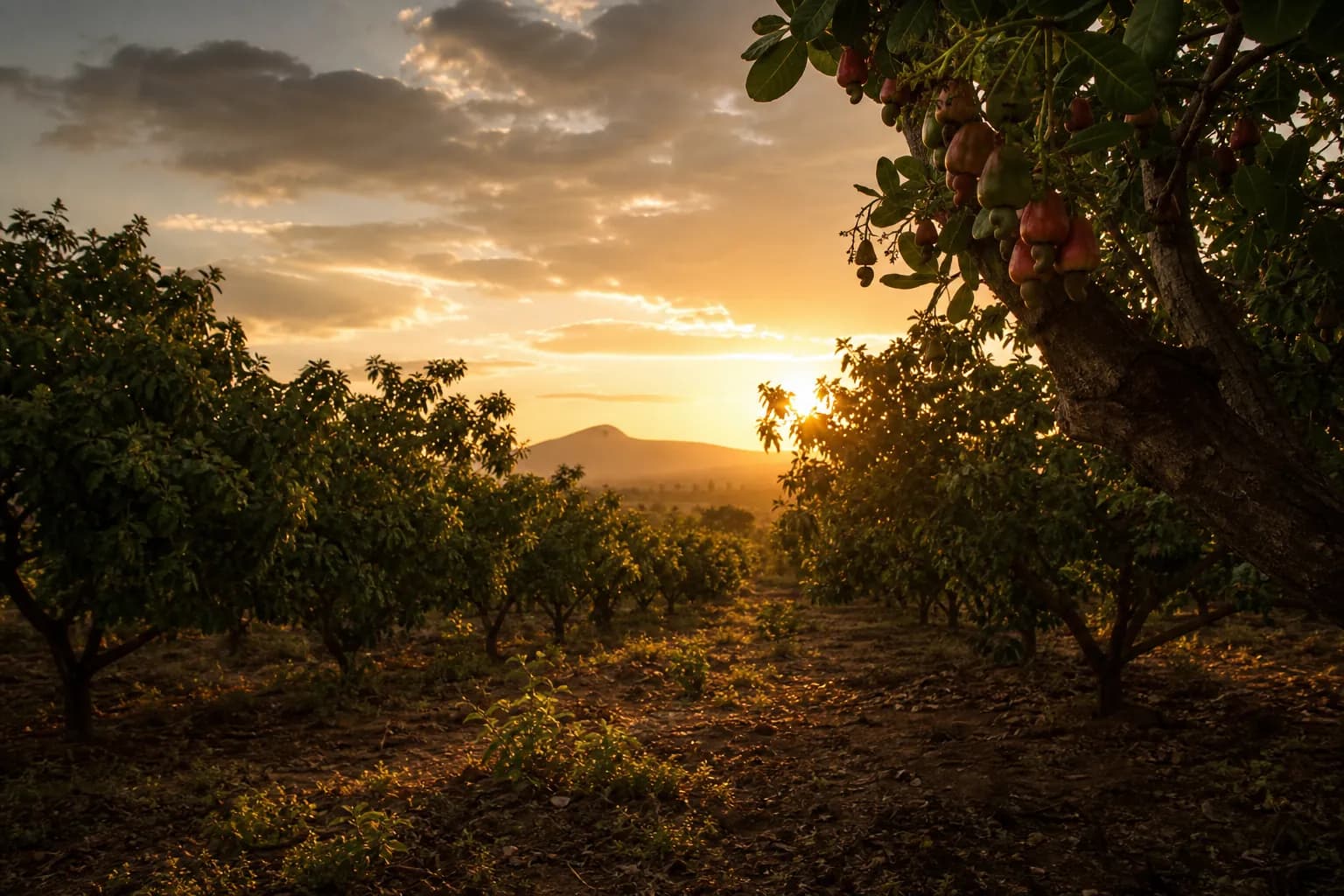

We built a free 15-minute course that walks one cashew deal from a buyer's first vague message to commission paid. This page is the written companion: the numbers, the forks and the vocabulary, in the order the course covers them, so you can skim before watching or keep it open afterwards.
The fork everything hangs on
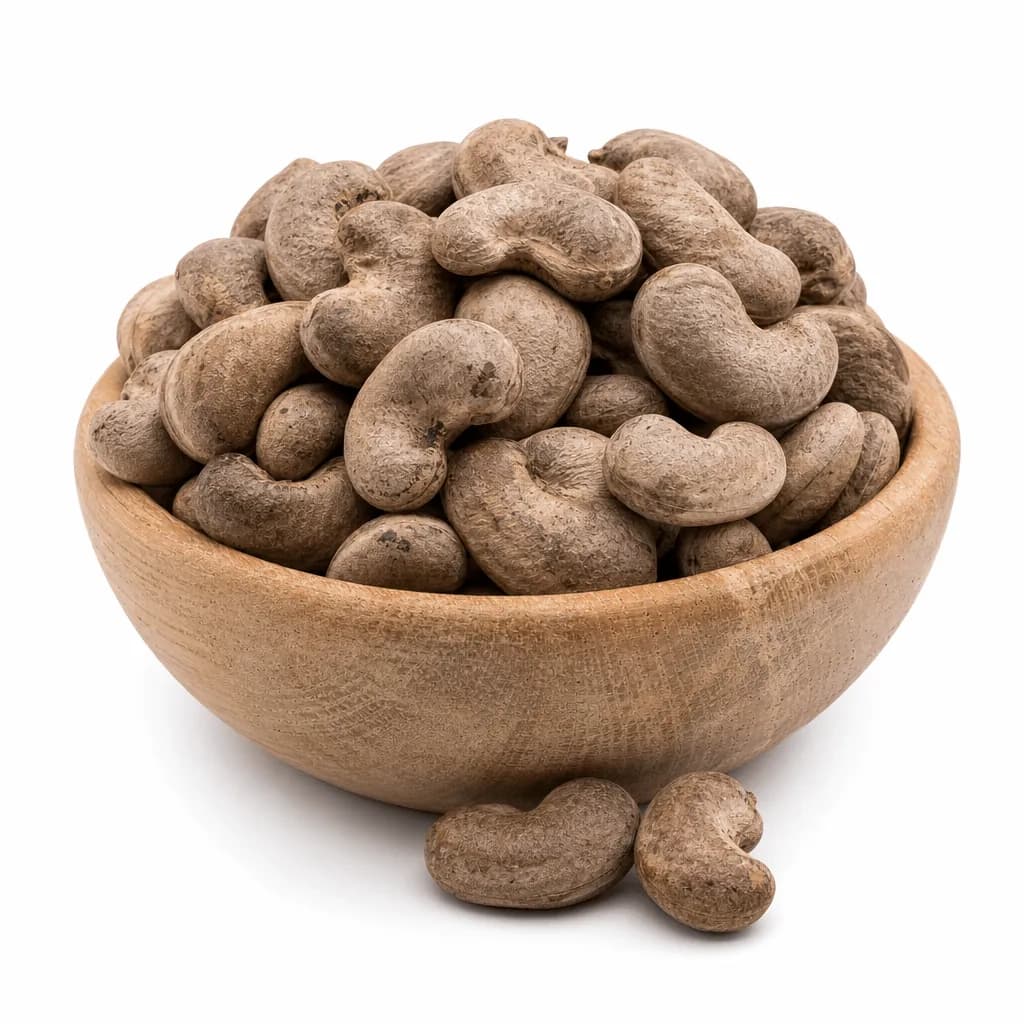
There is no product called cashews. There are two: RCN, raw nuts still in the shell, sold to shelling factories mostly in India and Vietnam; and kernels, the edible nut after shelling and peeling, sold to importers, roasters and food brands. Confuse them in a conversation with a real buyer and the conversation ends. Every price, packaging format and document downstream follows from that one choice.
The grades, in one block
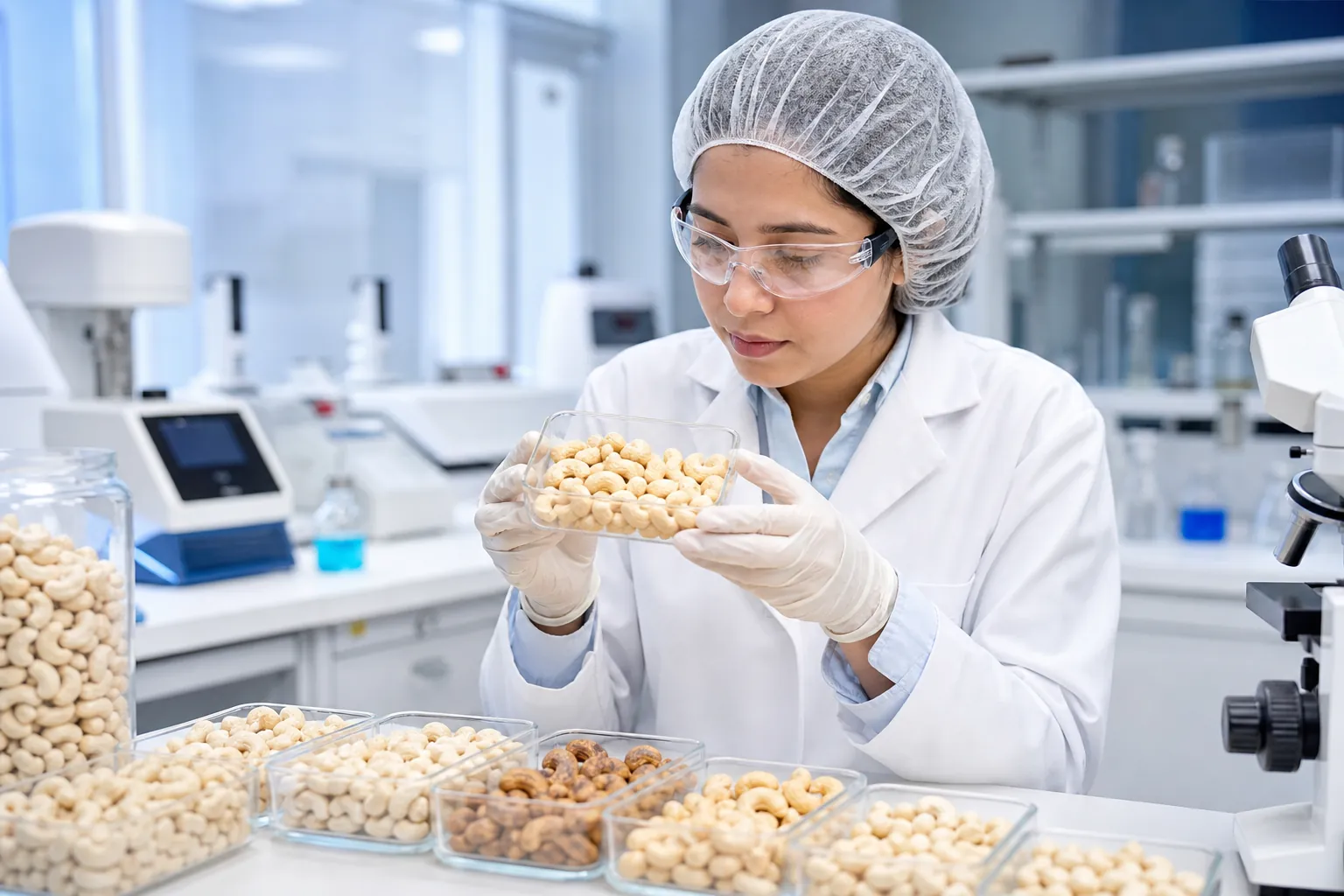
- Shape: whole, butt (broken across), split (halved lengthwise), then pieces down to baby bits. Wholes earn the most; pieces suit bakeries and butter makers.
- Size, for wholes: W180 about 140-180 kernels per pound, W210 about 180-210, W240 about 220-240, W320 about 300-320, W450 about 400-450. Lower number, bigger nut, higher price.
- W320 is the benchmark. When someone says the market price without qualifying it, they usually mean W320 white wholes.
- Colour: white is standard; scorched kernels darkened under processing heat and form their own quality class with their own tolerances, not simply cheap kernels.
The four numbers for raw nuts
- Out-turn (KOR): pounds of usable kernel per 80 kg bag. Tanzanian lots typically 46-54. A KOR of 49 is about 22.2 kg of kernel from that bag.
- Nut count: nuts per kilo. Fewer means bigger, but a big-looking nut does not guarantee yield. Only a cutting test on a representative sample tells you.
- Moisture: raw nuts 8-10 per cent, finished kernels 3-5 per cent. Too wet grows mould at sea; too dry and kernels shatter.
- Defects: empty, mouldy and insect-damaged nuts, plus stones and foreign matter, that pay for nothing.
Where the value is actually created
Processing is a sequence, not a crack: dry, clean and calibrate, steam to condition the shell, shell, dry the kernel, peel the testa, then grade, test and pack. Every step is a chance to turn an expensive whole kernel into a cheaper broken one, which is why whole kernels cost what they do and why scorched grades exist at all. The shell also holds a caustic oil, which is why nobody should ever crack cashews casually.
Chapter guide
- 0:06 What business are you actually entering
- 0:52 Cashews: from farm to international buyer
- 1:32 The two products: RCN vs kernels
- 2:32 How a raw nut becomes a kernel
- 3:32 Understanding grades and quality
- 5:06 A grade is not a specification
- 6:00 How cashews are bought and priced
- 6:58 Supplier verification and certifications
- 7:55 Turning an inquiry into a real deal
- 8:53 Payments, Incoterms and risk
- 10:28 Air, sea and the real lead time
- 11:32 Shipment and essential documents
- 12:44 Who is allowed to export
- 13:43 How not to get scammed
The six questions the course ends on
- What exact product, grade and specification is being traded?
- Have I verified the supplier and the stock?
- Does the product match the buyer's spec, with a certificate of analysis to prove it?
- Who pays for shipping, insurance and inspection?
- How is payment secured?
- When, and how, do I get paid?
Related reading
Leave a Comment
Your email address will not be published.