

At a glance
- Out-turn (KOR) is the pounds of useful kernel estimated by cutting a sample of raw nuts, scaled to an 80 kg bag.
- Our RCN grade specifications span 48 to 54 lb KOR; the offered lot still needs its own cutting test.
- A 52 lb cutting-test result estimates about 23.6 kg of useful kernel per bag; actual factory recovery can differ.
- A higher KOR estimates more useful kernel, but plant recovery must be measured separately.
- The safe moisture window at bagging is 8 to 10 per cent — above it risks mould, below it brittle shells.
- Experienced buyers contract a target out-turn band with an adjustment formula, not gross weight alone.
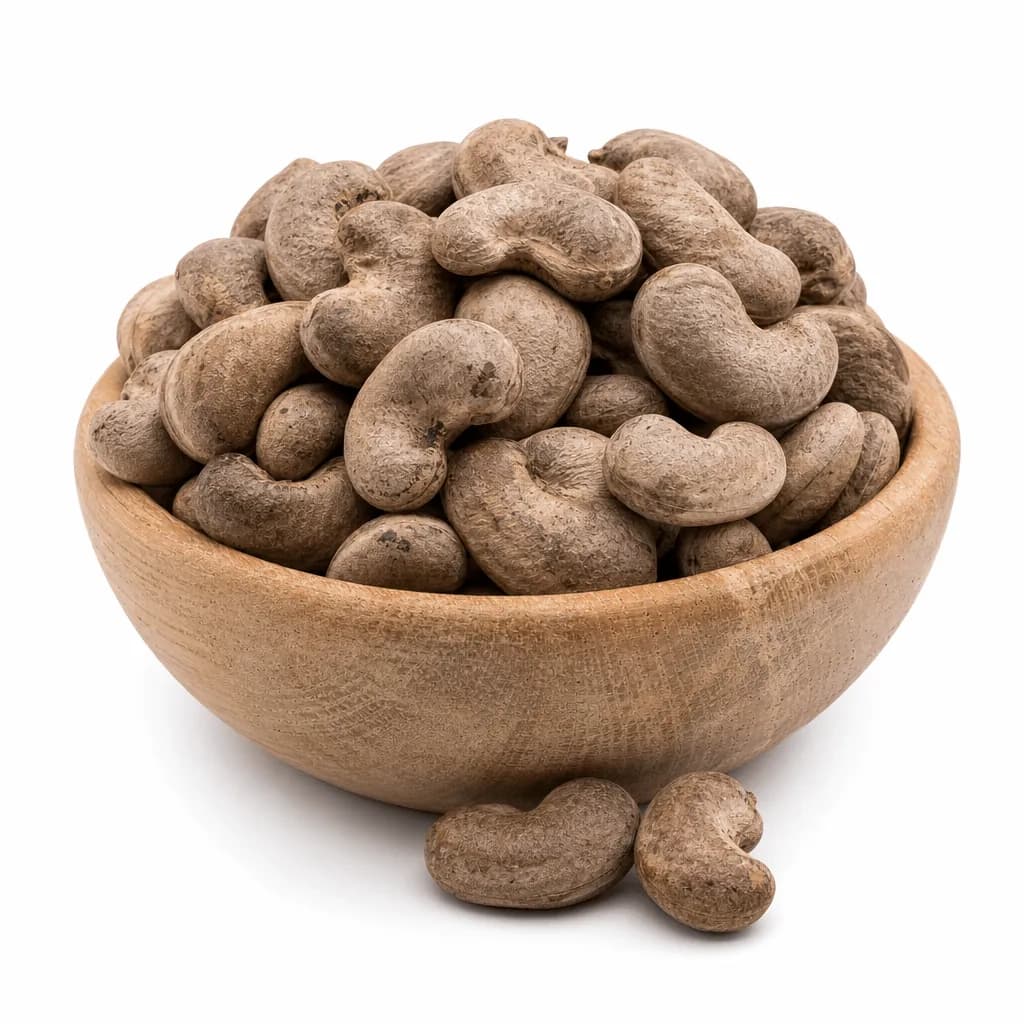
Out-turn, also written as KOR, is a cutting-test estimate of pounds of useful kernel per 80 kg of raw cashew nuts. Our documented RCN grades cover 48 to 54 lb bands, but an offered lot needs its own representative sample and test. Do not read a grade band as a promise of a plant's finished yield.
How out-turn is measured
A buyer draws a representative sample from the lot and uses a cutting test to estimate the weight of useful kernel. The result is expressed in pounds per 80 kg bag, a legacy unit the global cashew trade still uses. A 52 lb KOR estimates about 23.6 kg of useful kernel from that bag. It is not a promise of finished factory yield: the test cannot establish the later breakage, grade mix or processing losses. Agree how the sample is drawn and tested, then use your own plant recovery history when estimating finished output.
What drives out-turn
- Growing district, a traceability field to record, not a substitute for testing the actual lot.
- Harvest timing — nuts that fell naturally and were collected promptly retain more usable kernel than nuts collected after sitting on damp ground.
- Drying discipline — moisture above 10 per cent at bagging risks mould; below 8 per cent risks shell brittleness during shelling. The 8 to 10 per cent window is where out-turn holds.
- Storage conditions — ventilated, off-the-ground warehouse storage keeps out-turn stable across the season; poor storage degrades it lot by lot.
- Defect rate — discoloured, shrivelled or mould-marked nuts are excluded from the usable kernel count and pull the out-turn down.
How out-turn affects pricing
Two RCN lots can have the same gross-weight quote and different estimated kernel content. Compare their cutting-test results and the sampling methods behind them, then apply your own plant's recovery data when modelling the finished grade mix. The contract should name gross weight, the agreed out-turn band and the adjustment process if a delivered lot tests outside it. Do not treat a higher KOR alone as a guaranteed processing margin.
“Buying RCN on gross weight is buying a number on a bag. Buying it on out-turn is buying the kernel you'll actually sell — which is the only number that matters by the time the lot is shelled.”
- Asha Ngonyani, Quality Manager
Tanzanian out-turn bands at a glance
- 48–50 lb: our standard RCN grade from Mtwara, subject to the offered lot's test.
- 50–52 lb: our organic RCN grade from certified-organic clusters in Tunduru; verify the producer certificate for the lot.
- 52–54 lb: our premium RCN grade from Tunduru, subject to the offered lot's test.
What to specify in your RCN contract
- Target out-turn band — e.g. 'minimum 50 lb out-turn, target 52 lb'.
- Sampling method — how the representative sample is drawn and how disputes are resolved.
- Adjustment formula — what happens if delivered out-turn falls below or rises above the agreed band.
- Moisture spec — the 8 to 10 per cent window that protects out-turn through transit.
- Defect tolerance — percentage of discoloured, shrivelled or mouldy nuts allowed before the contract is renegotiated.
Pricing RCN on out-turn rather than gross weight closes the gap between what the bag says and what your processing line will actually deliver. It is a small contract change with a meaningful impact on landed kernel cost — and it is how the most experienced cashew buyers structure their programmes.
Related reading
- Wholesale cashew nuts supplier overview- grades, MOQ, ports and documents in one place
- Cashew kernel grades explained- What the kernel inside the shell becomes
- Why single-origin cashew sourcing matters- Out-turn consistency starts with district-level traceability
- Keeping aflatoxin out of every cashew shipment- Drying and moisture discipline protects out-turn
- Cashew price trends 2026- How RCN pricing dynamics shape the season
Related reading

Leave a Comment
Your email address will not be published.