

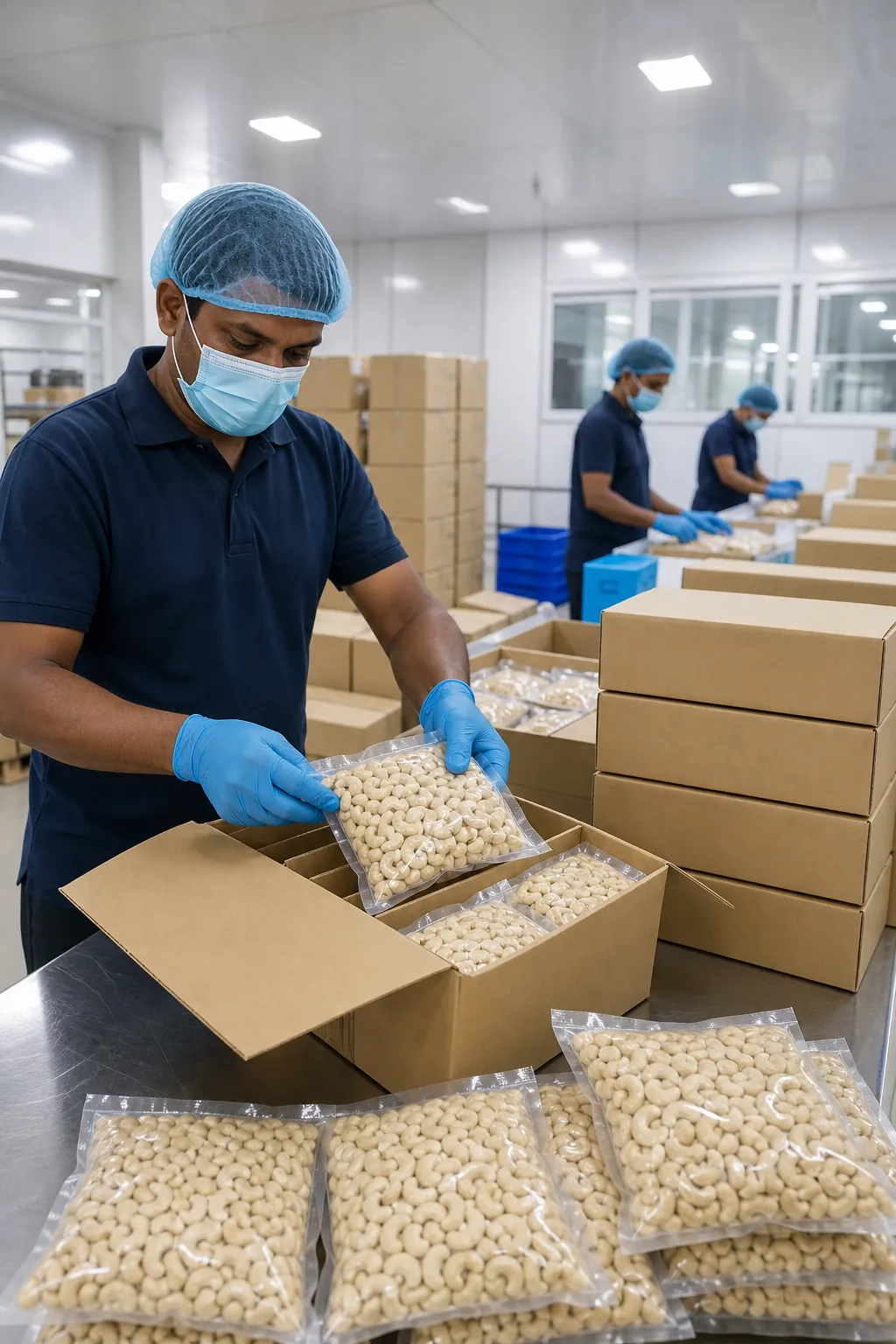
Tanzania's cashew exports earned roughly 448 million US dollars in the year ending November 2024 — more than double the 216 million US dollars a year earlier — driven by both higher international prices and stronger volume out of the southern growing belt. As the 2026 harvest year takes shape, the same forces that lifted last season's numbers are still at work: tight global supply, recovering African production, and steady downstream demand from snack, confectionery and plant-based dairy manufacturers.
October 2026 correction: auctions are scheduled for 12 October
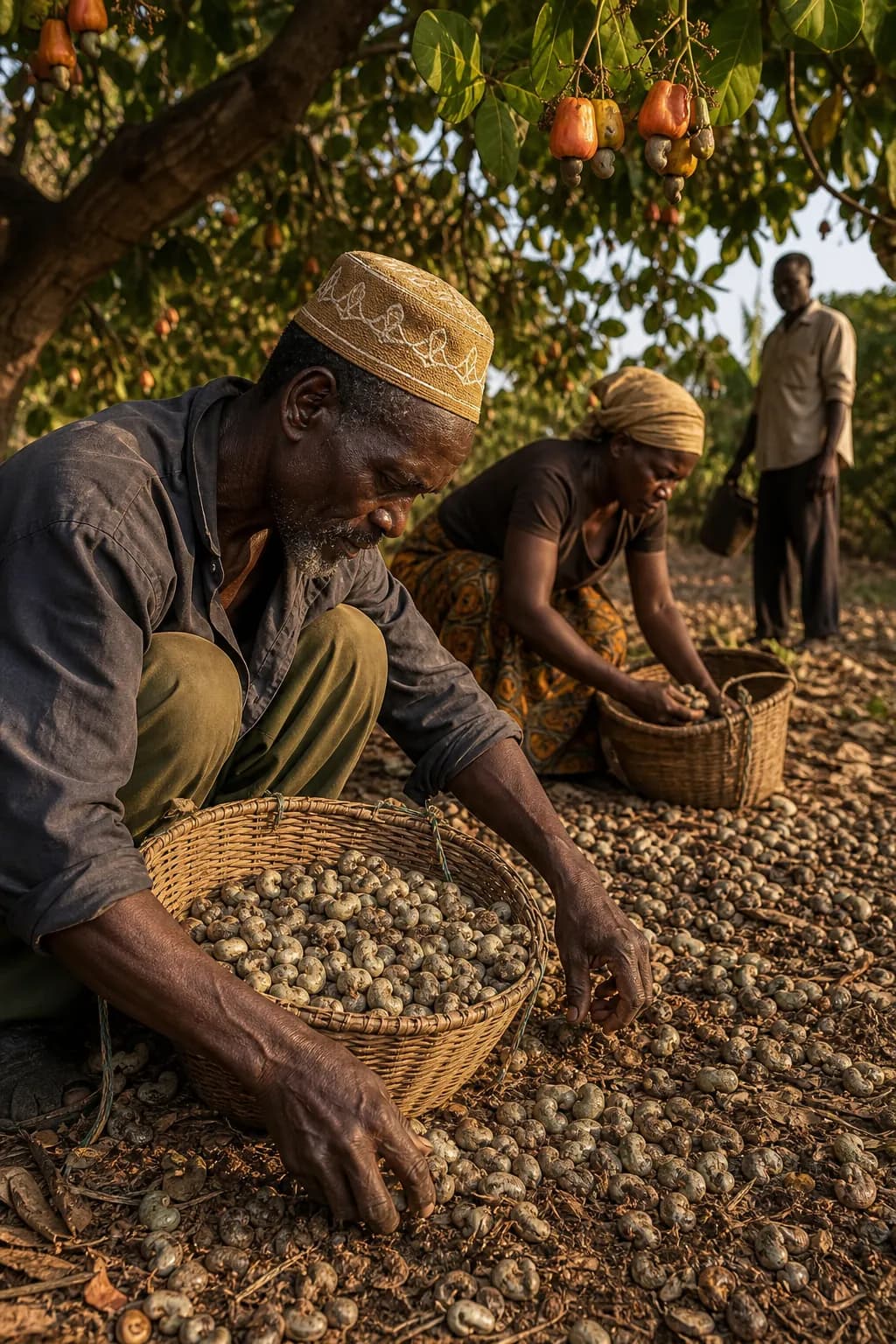
In a notice dated 27 September 2026, the Cashewnut Board of Tanzania said auctions for the 2026/27 raw-cashew season are scheduled to begin on 12 October. The announced first auction is not the date a buyer can load a container: harvested nuts still need drying, grading, warehouse intake, sale, payment, release and a vessel booking. Check the Board's current auction notices and the identified lot before agreeing a shipment window.
Check the dated announcement and the buyer timeline
For buyers the practical point is not to treat a calendar announcement or a production target as available stock. Ask which crop year and warehouse lot a quote refers to, review out-turn and moisture results, and confirm both the release plan and vessel schedule before putting a loading date in the contract.
What is moving prices in 2026
- Tight global RCN supply — climate variability in West Africa kept earlier seasons short, supporting prices.
- Vietnam processing concentration — roughly 60 per cent of global kernel supply moves through Vietnamese factories, so their procurement appetite sets a baseline for raw-nut markets.
- Recovering African production — Tanzania's southern growing belt has been steady; Côte d'Ivoire output is the swing factor.
- Steady downstream demand — snack, confectionery, plant-based dairy and bakery use continues to grow, particularly in Asia and the Middle East.
- Currency moves — Tanzanian shilling and Vietnamese dong fluctuations move FOB and CIF quotes month to month.
What this means for kernel buyers
Whole-kernel grades — W180, W210, W240 and W320 — generally hold the strongest pricing through the harvest year because demand for premium snack and gift formats stays firm. Splits, pieces and scorched grades follow a softer curve, often tracking processor inventory cycles in Vietnam and India. For a buyer running a programme rather than spot orders, contracting volumes early in the season — October through December — typically locks better prices than waiting for the late-season window when freight rates rise and the best out-turn lots are already committed.
What this means for RCN buyers
Raw cashew nut prices respond more directly to harvest yield and out-turn than to downstream kernel demand. Tanzania's RCN out-turn typically ranges from 48 to 54 lb per 80 kg bag depending on growing district and harvest timing. Higher out-turn lots — 52 lb and above — command a premium because they reduce a processor's shelling cost per kilogram of kernel. Buyers who price on out-turn rather than gross weight typically pay closer to the real value of the lot.
“Cashew pricing is two stories told in the same season. The kernel side tracks consumer demand; the raw-nut side tracks how much usable kernel is inside the shell. Buyers who confuse the two end up over-paying or under-buying.”
- Joachim Mbwana, Sourcing Lead
Six dynamics to watch through 2026
- Côte d'Ivoire harvest — the swing factor for global RCN price floors.
- Vietnam factory utilisation — when Vietnam runs full, RCN demand stays firm and kernel prices stabilise.
- EU and US aflatoxin enforcement — periodic tightening at borders moves premium-grade prices.
- Tanzania commodity auction prices — published mid-season; a public read on RCN clearing levels.
- Container freight rates from East Africa — material to CIF buyers; less impact on FOB programmes.
- Plant-based dairy ingredient demand — the fastest-growing kernel use case; sensitive to W240 and W320 grades.
Practical guidance for the 2026 buying cycle
- Contract early — October through December locks prime grades before the mid-season squeeze.
- Specify out-turn for RCN, not gross weight — it reflects real value and avoids surprises.
- Match grade to end use — over-specifying W240 wholes for a product that grinds the kernel wastes money.
- Build a relationship with one origin and one processor — diversification of role, not vendor count.
- Track aflatoxin documentation by destination — EU and US enforce different thresholds; ask for the matching report set.
Pricing predictions are guesses, especially in a market shaped by weather, freight and policy as much as by supply. What we can say with more confidence is that the gap between origin and processor pricing tends to narrow as the season progresses, and that buyers who plan their volume against harvest timing rather than calendar timing tend to land better numbers. If you would like an indicative FOB quote on W180–W320 kernels or out-turn-graded RCN for a specific destination, our Mtwara desk can return one within a business day.
Related reading
- Wholesale cashew nuts supplier overview- grades, MOQ, ports and documents in one place
- Tanzania vs Vietnam cashew- Producer vs processor — the buyer trade-off
- Tanzania vs India cashew nuts- Origin and processing in another pairing
- Inside Tanzania's cashew season- Why timing the harvest decides quality
- How to import cashew nuts from Tanzania- The end-to-end buyer's guide
Related reading

Leave a Comment
Your email address will not be published.