

At a glance
- Wholesale cashew kernels are quoted per kilogram or per pound, FOB or CIF, with a 20-foot container — around 12.5 metric tons of vacuum-packed kernels — as the standard pricing unit.
- There is no fixed list price: kernel quotes reset with the raw cashew nut (RCN) season, which in Tanzania runs October to January.
- Grade sets the premium ladder — W180 prices highest, then W210, W240 and W320; W320 is the benchmark grade most quotes reference.
- FOB covers everything to the vessel at the origin port; CIF adds ocean freight and marine insurance — a 30-to-35-day leg on the Tanzania-to-northern-Europe route.
- Splits, pieces and scorched grades price below white wholes: same nut, lower cost of presentation.
- Sub-container volumes can push landed cost per kilogram up 30 to 60 per cent, because a container's fixed costs stop being shared.
Ask three exporters 'how much do wholesale cashews cost?' and you will get three different numbers — all of them honest. A wholesale cashew price is assembled, not read off a list, and the assembly changes with grade, Incoterm, origin, season and volume. This guide walks through each component so an indicative quote makes sense the moment it lands in your inbox.
What is inside a wholesale cashew quote?
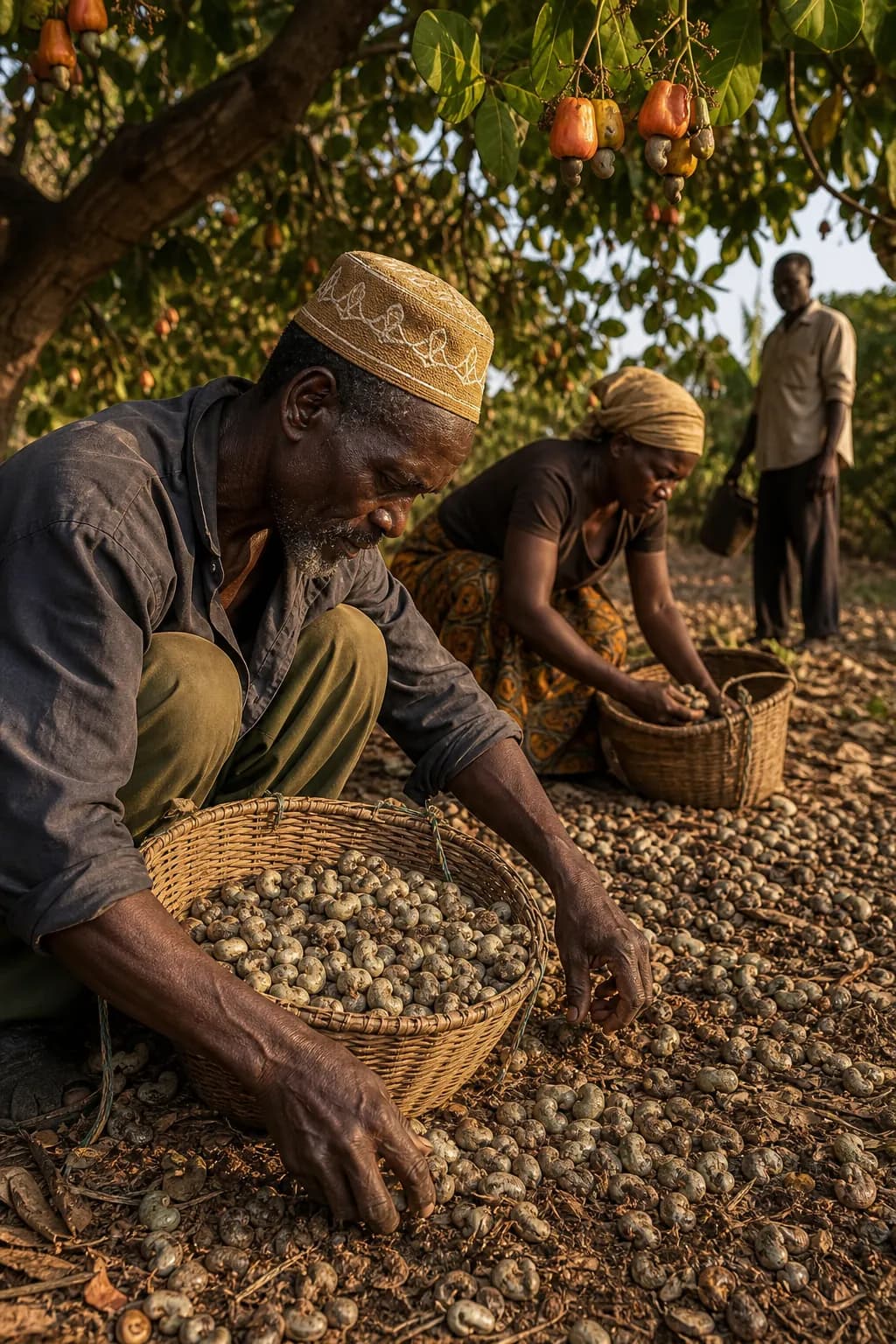
Every kernel quote is built from five components stacked in the same order: raw material, processing, packaging, logistics and the exporter's margin. The raw cashew nut is by far the largest slice, which is why kernel prices track the RCN season more closely than anything else.
- Raw material — the RCN cost, set at harvest and shaped by out-turn: higher-yield nuts cost more per ton but less per kilogram of recovered kernel.
- Processing — shelling, peeling, grading and sorting; the cost per kilogram of kernel falls as out-turn rises.
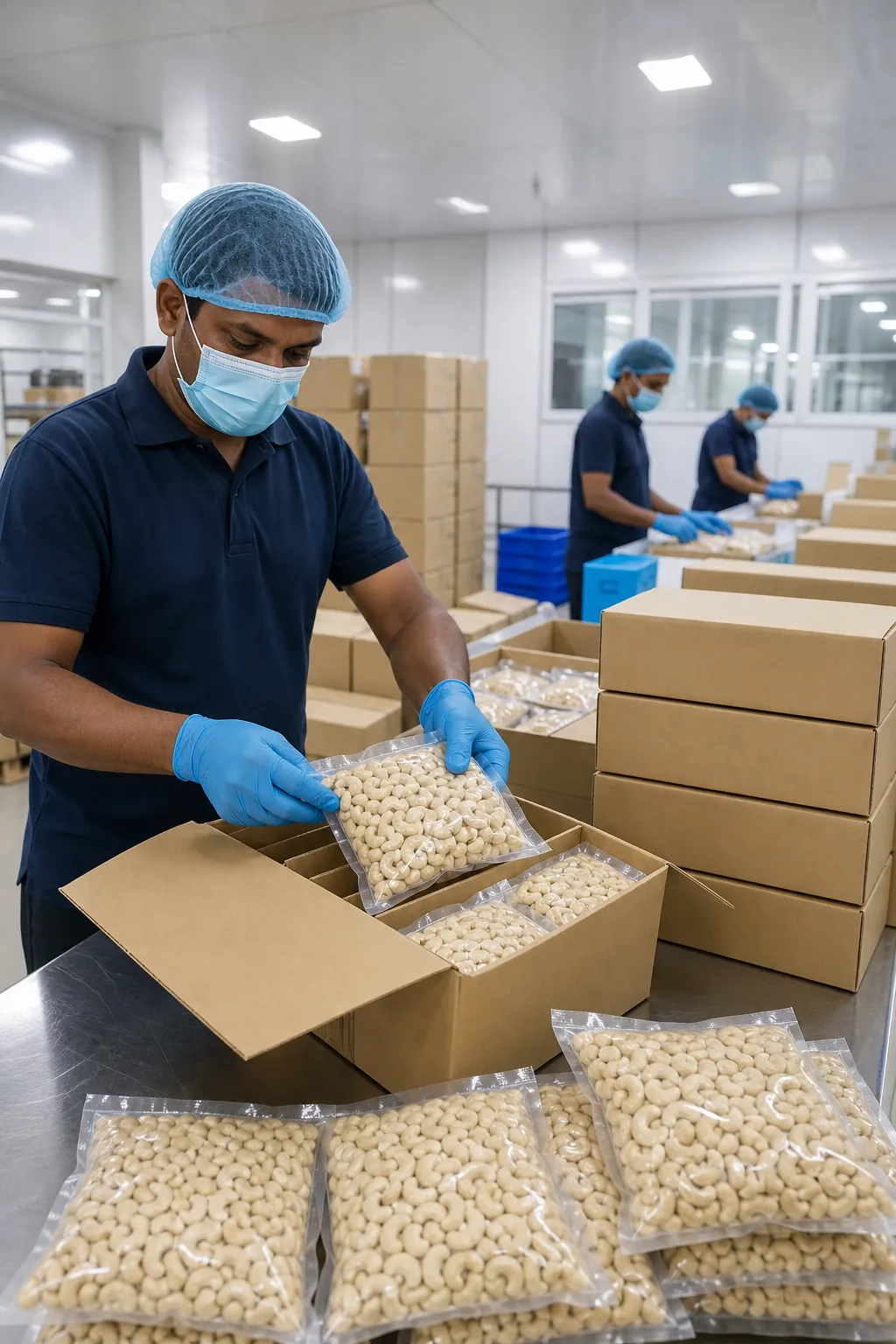
- Packaging — vacuum-packed, gas-flushed 10 kg tins inside export cartons, the trade standard for kernels.
- Logistics to FOB — inland haulage, port handling, export documentation and container loading.
- Freight and insurance — added only on CIF and CFR contracts; varies by destination lane and season.
FOB or CIF: which price are you actually looking at?
FOB (Free On Board) prices the goods delivered onto the vessel at the origin port — Mtwara or Dar es Salaam for Tanzanian cashews — with the buyer arranging ocean freight and insurance. CIF (Cost, Insurance and Freight) is the same goods with those two items added, priced to the destination port. Neither is cheaper in any real sense; they split the logistics risk at a different point.
- FOB origin port — goods, processing, packaging, inland transport, export documentation and loading. The buyer books and pays for the sea leg.
- CFR destination port — FOB plus ocean freight; the buyer still insures the cargo.
- CIF destination port — FOB plus ocean freight plus marine insurance; one number to the destination port.
Experienced buyers with their own freight programmes usually prefer FOB — their negotiated rates often beat what an exporter can book. First-time importers often start CIF for the simplicity, then move to FOB once volumes justify a freight relationship.
How much more do the larger grades cost?
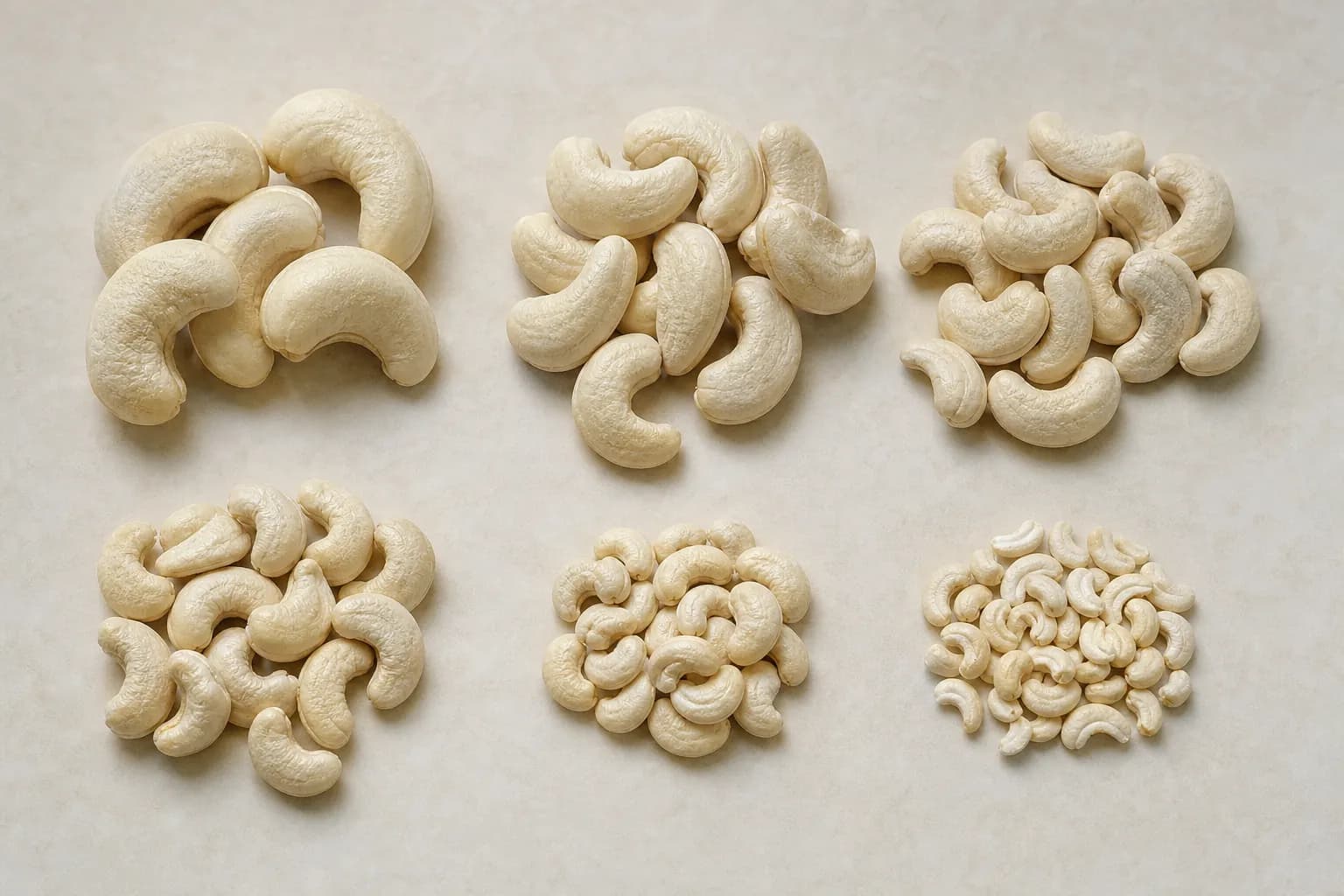
Larger grades always carry a premium: W180 prices above W210, which prices above W240, which prices above W320. The reason is arithmetic, not marketing — only a limited share of any harvest grows kernels large enough to count 180 to the pound, so scarcity does the pricing. The gaps between grades are not fixed percentages; they widen when demand for premium and gift formats spikes and narrow when it softens. What holds across seasons is the order of the ladder, and the fact that W320, as the most widely traded grade, is the reference point the rest are quoted against.
Below the white wholes, scorched kernels, splits and pieces price progressively lower. Nothing about the nut changes — the discount buys a different appearance, which is why processors who grind or coat the kernel rarely pay white-whole prices.
Why do origin and season move the price?
Two forces move a cashew quote that have nothing to do with grade: where the nut grew and when in the season you contract. Origin-side quotes from Tanzania respond directly to the local harvest and its out-turn; processor-side quotes from Vietnam or India blend RCN costs from across Africa and Asia and add a stage of intermediation between the farm gate and your contract.
Season matters because the RCN cost floor resets every year at harvest. Contracting early in the Tanzanian season — October through December — typically locks better numbers than the late window, when freight tightens and the best out-turn lots are already committed. Any ranges quoted mid-season are indicative factors, not standing prices: a serious quote is dated, time-boxed and tied to a named grade and volume.
How container economics change your per-kilo cost
The 20-foot container is the unit the whole price structure is built on: roughly 12.5 metric tons of vacuum-packed kernels, or 17 to 18 metric tons of raw cashew nuts in 80 kg bags. Documentation, port charges and handling are largely fixed per container, so every kilogram you load shares them a little further.
That is why sub-container orders price so poorly — the fixed costs stop being shared, and landed cost per kilogram can rise 30 to 60 per cent — and why the practical minimum order for wholesale cashews is one full container. Our MOQ guide covers what changes at one, two and five containers per quarter.
“A cashew price is a stack, not a secret. Buyers who understand what each layer costs negotiate the layer that can actually move — and stop pushing on the ones that cannot.”
- Joachim Mbwana, Sourcing Lead
How to get a quote you can compare
Send four things and any serious exporter can return a real number within a business day: the grade (or RCN out-turn band), the volume in containers, the destination port and the Incoterm you want quoted. Ask for the quote's validity window in writing — cashew prices move with the RCN season, so an honest quote carries a date and an expiry. A quote that never expires should worry you more than a high one.
Browse the grades this guide prices
Related reading
- Wholesale cashew nuts supplier overview- grades, MOQ, ports and documents in one place
- Cashew price trends 2026- The market dynamics behind this season's numbers
- Cashew wholesale MOQ explained- What changes at 1, 2 and 5 containers
- Cashew out-turn (KOR) explained- How yield sets the raw-material cost
- How to import cashew nuts from Tanzania- The seven-step buyer's playbook
Related reading
Leave a Comment
Your email address will not be published.